
There’s a reason seasoned fly fishers talk about steelhead fishing the way they do — almost like a rite of passage. It’s not just the fish. It’s the cold, the unpredictability, and the humbling reality that everything you know about trout fishing gets thrown out the window the moment you step into steelhead water.
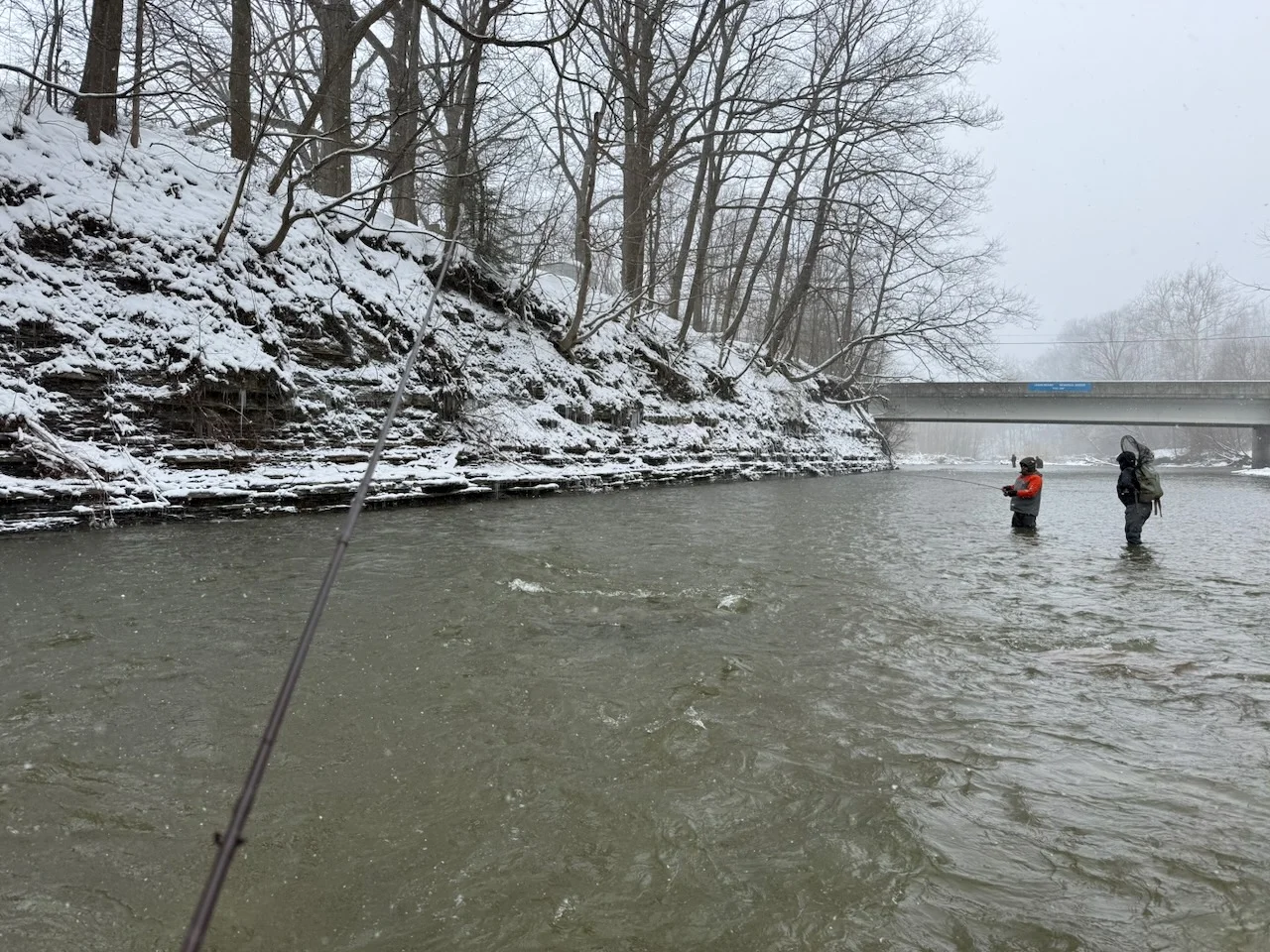
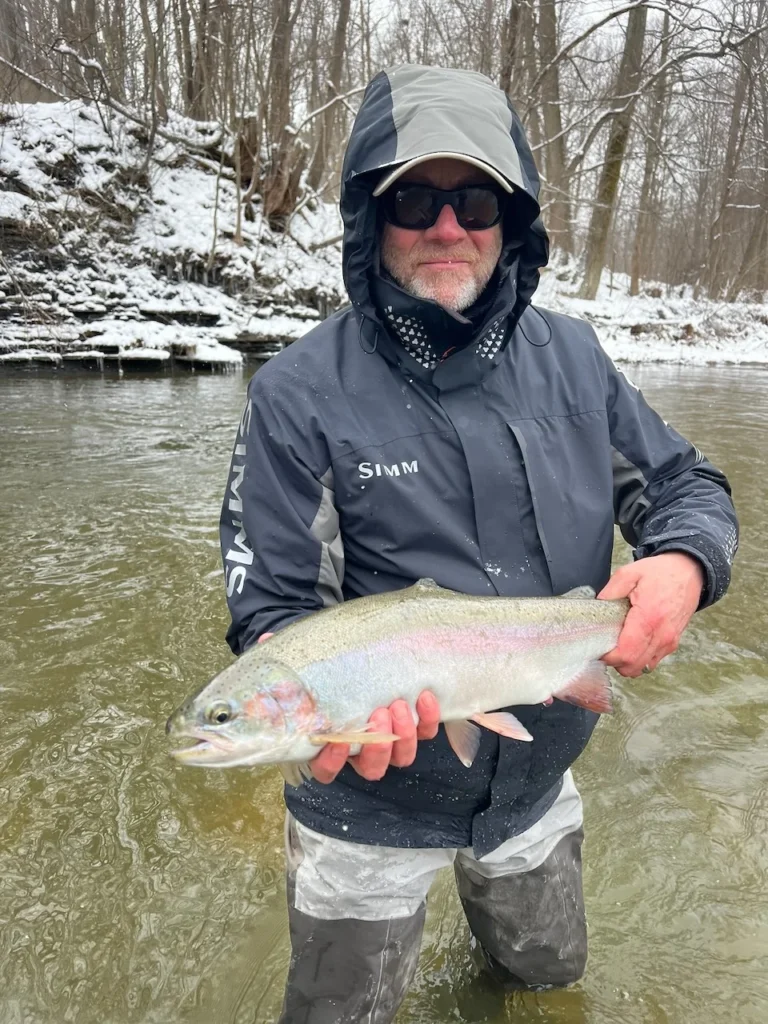
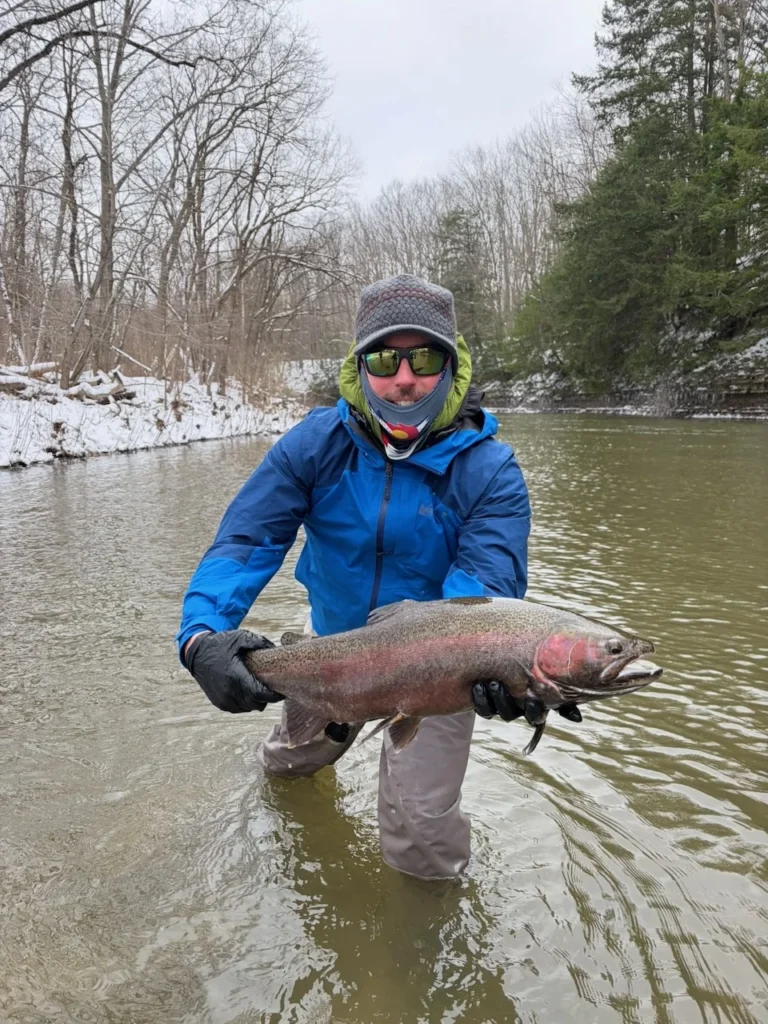
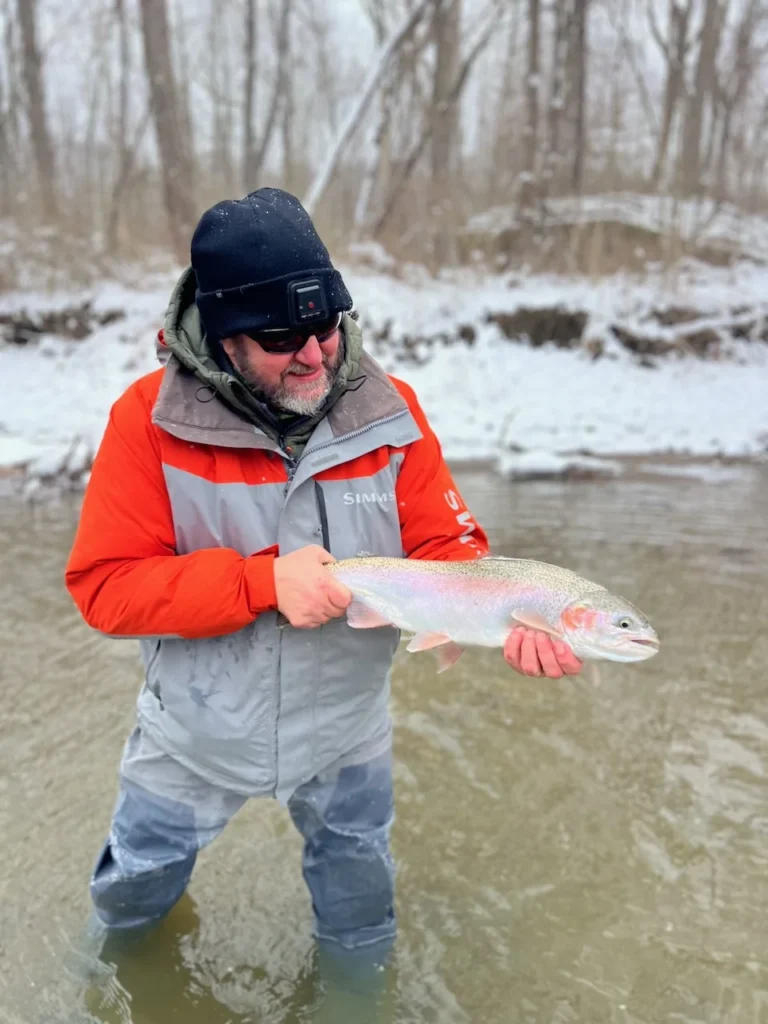
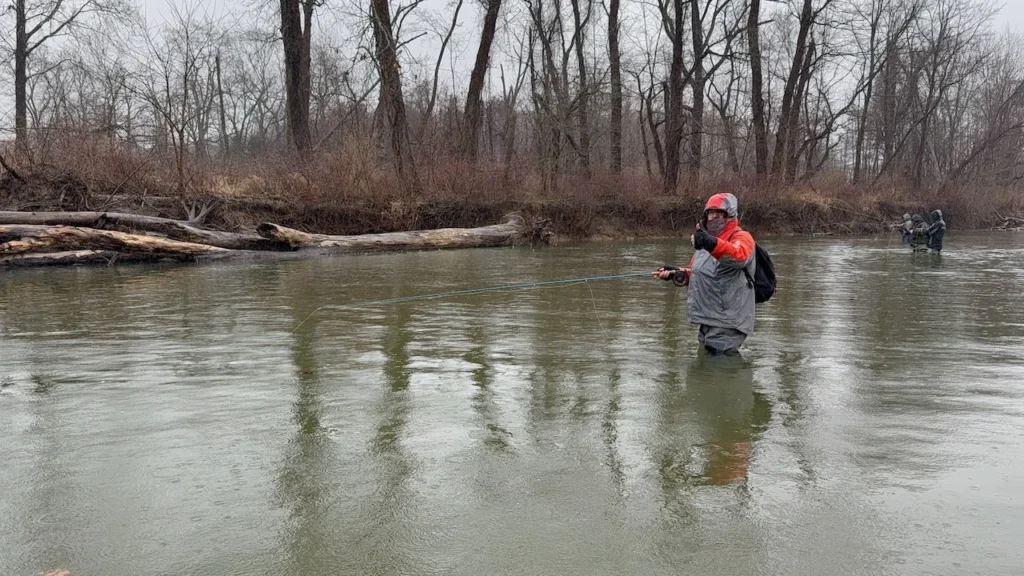
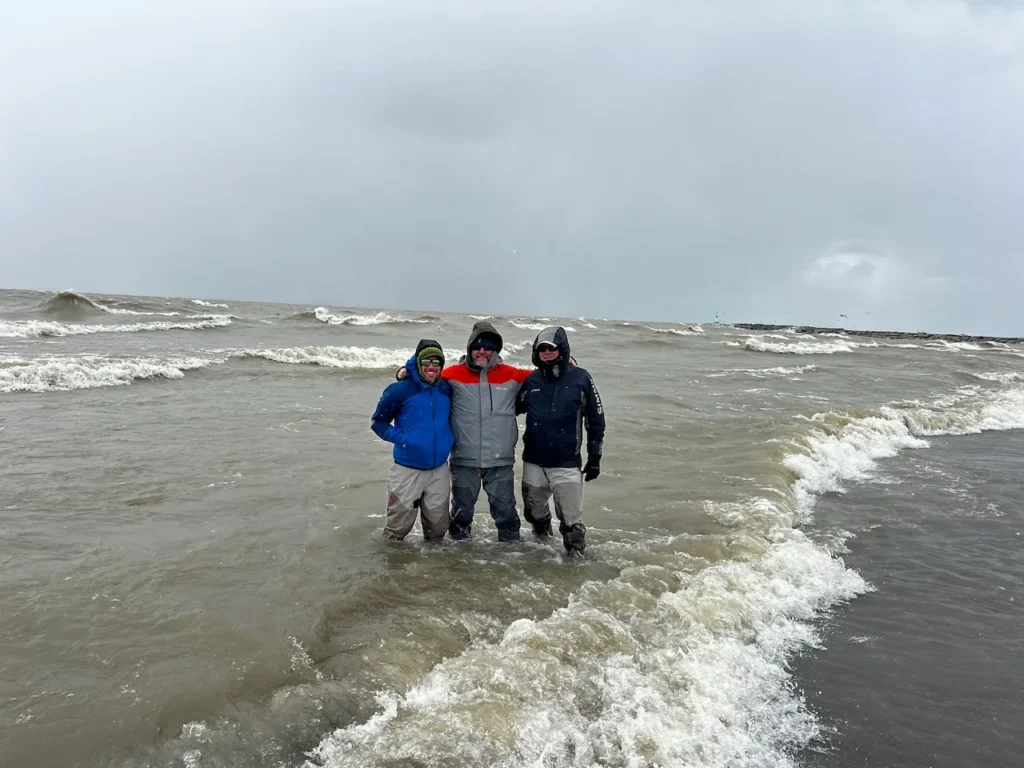
The IdentaFly team found that out firsthand through a guided trip organized by Dark Skies Fly Fishing. After postponing our trip last fall, we finally made it to Conneaut Creek — a Lake Erie tributary along the Ohio/Pennsylvania border — for our first-ever steelhead trip. True to the sport’s reputation, we got the full experience: cold temps, snow, wind, and wet everything. And we embraced every minute of it.
Here’s what we learned, and make sure to scroll down to watch the video.
What are Steelhead Trout?
For those unfamiliar: steelhead are rainbow trout that have migrated to open water — typically the ocean on the Pacific Coast, or one of the Great Lakes in the Midwest and Northeast. That time spent in big water changes them dramatically. They grow larger, stronger, and far more powerful than their river-bound cousins. When they return to their home rivers to spawn, they’re essentially a different animal to fight on the end of a line.
On the West Coast, true Pacific steelhead run rivers in California, Oregon, Washington, and up into British Columbia and Alaska — and they have a cult following for good reason. Great Lakes steelhead, like the fish we chased on the Conneaut River, are technically the same species but landlocked, trading the Pacific for Lake Erie, Lake Michigan, and the other Great Lakes. The fishing experience is remarkably similar, and the fish are just as hard-fighting. If anything, the brutal Midwest and Northeast winters add an extra layer of grit to the whole affair.
1. Simplify Your Fly Box
If you’re a typical trout angler, your fly box is probably packed — nymphs, dries, emergers, a dozen variations of each. For steelhead, you can leave most of that at home.
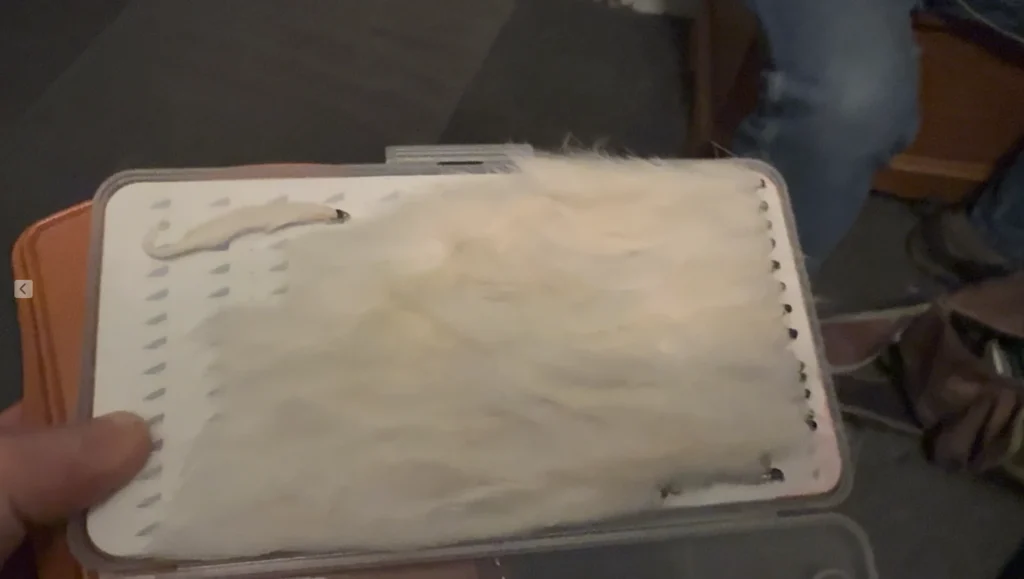
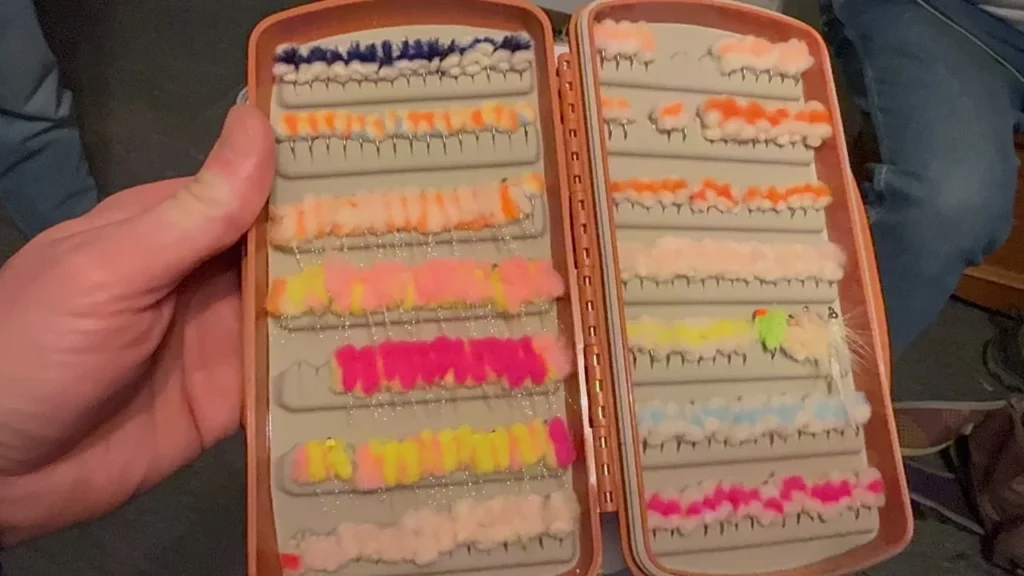
We fished with egg patterns and small streamers 100% of the time. Our go-to setup was a Y2K egg pattern as the point fly with a White Death (or White Zonker) as the trailing fly — and that combination did the work all day.
One thing worth noting: bring your egg patterns in multiple colors. We learned – from our other guide from Mountain Laurel Guide Service, water clarity on rivers like the Conneaut and Elk Creek can vary a lot depending on conditions, and matching your fly’s visibility to the water can be the difference between getting attention from a fish and getting ignored. When the water is off-color, go brighter. When it’s clearer, dial it back.
The takeaway: strip your fly box down and trust the simplicity. Steelhead fishing rewards focus over variety.
2. Get the Fish on the Reel — Fast
This is probably the biggest adjustment for anyone coming from a traditional trout fishing background.
Most trout anglers are used to managing line with their free hand — stripping, controlling slack, fighting the fish manually. With steelhead, that habit will cost you fish. These are powerful, fast, and surprisingly crafty animals. They’ll run hard downstream, then turn around and charge straight at you. They’ll headshake until they find any slack in the line and use it to throw the hook.
The moment you have a steelhead on, your job is to get it on the reel as fast as possible. Let the drag do the work. Set it so the fish can still pull line when it needs to run, but be ready to reel the instant it gives you an inch. Keep your rod bent — that flex is doing more than you think to absorb the fight and keep pressure on the fish.
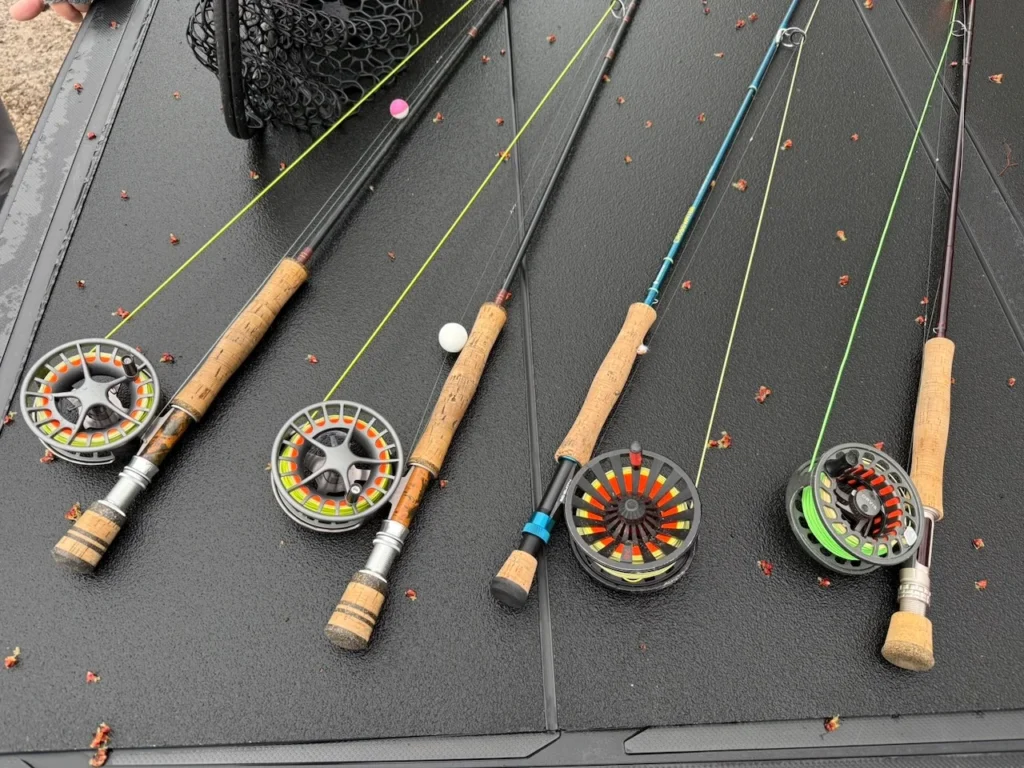
We fished 7 and 8 weight rods with 3x tippet, which gave us enough backbone to handle the fight without overpowering the presentation.
The takeaway: fight the urge to hand-strip. Trust your reel, keep tension, and stay ready for the fish to change direction without warning.
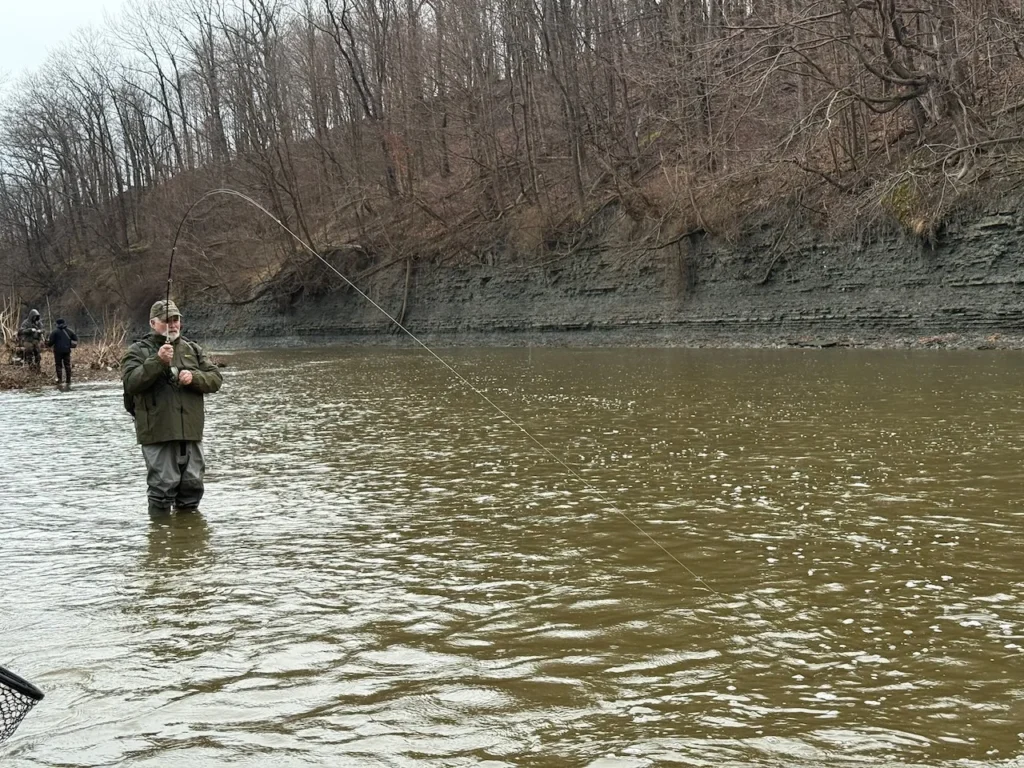
3. Be Prepared to Move Around
Steelhead are lake-run fish, which means they’re migratory — and that changes everything about how you find them.
With your typical rainbow, brown, or brook trout, you’re looking at seams, riffles, and tailouts. The fish hold in predictable spots and you learn to read the water over time. Steelhead use those same features, but there’s no guarantee they’ll be there when you show up. They move at night, which means during the day they’re holding to rest and feed — but “holding” could mean anywhere along their migration route.
We caught fish in water that looked perfect, and we got skunked in water that looked just as good. The difference was often just being in the right place at the right time — which meant staying mobile and covering water throughout the day.
If you don’t already know the migratory patterns of steelhead on the river you’re fishing, go with a guide or someone who does. Local knowledge isn’t just helpful here — it’s almost essential. We were kept well fed and energized by staying at the lodge run by Captain Kurt, whose property is about 100 yars from the Conneaut. His knowledge was very impressive about the entire stretch of creek. Additionally, we would check out another tributary, Elk Creek, which is nearby in PA.
The takeaway: don’t get married to one spot. Stay mobile, read the conditions, and lean on local expertise whenever you can.
Plan Your Trip
- Dark Skies Fly Fishing: PA based guide + group trips
- Mountain Laurel — PA guide for wade & float trips
- Captain Kurt — lodging and guided trips on the Conneaut River and Great Lakes. Multiple fishing options.
- Conneaut Creek — current conditions and info
- Elk Creek – current conditions and info
Leave a Reply