
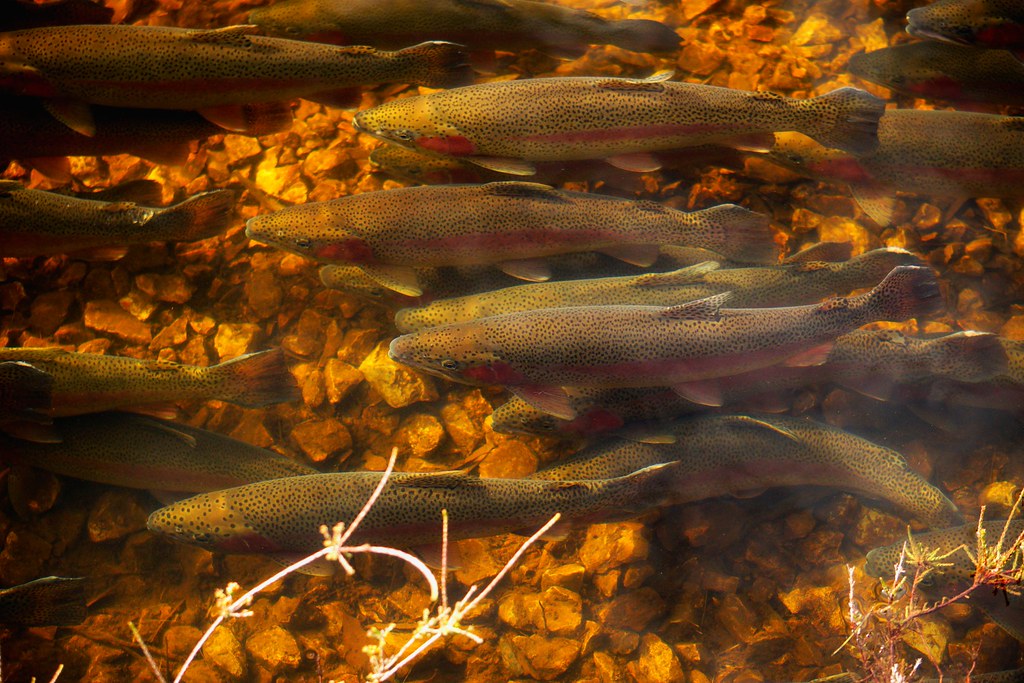
When you think about what makes a river “fishy,” your first thought is probably bug life—mayflies, caddis, midges, and the seasonal hatches we all love to chase. But not all rivers are built the same. Some are insect-driven systems, where trout survive almost entirely on nymphs and emergers. Others offer an extra “power meal” in the form of sculpins and other small baitfish, giving trout more calories per bite—and often more size.
And then there are tailwaters where trout get a wild card: mysis shrimp drifting straight out of the reservoir.
Let’s look at how these different food sources shape trout, using two Colorado classics—the Blue River near Dillon/Silverthorne and the Arkansas River between Leadville and Cañon City—as examples.
The Blue River: Consistent Temps, Limited Bugs, and Shrimp-Powered Trout
The Blue River below Dillon Reservoir is a classic tailwater. Because water flows from the bottom of the dam, it stays cold and stable year-round. That stability is great for trout metabolism—they don’t see big stress swings from summer heat or winter ice.
But there’s a tradeoff. Many aquatic insects rely on seasonal temperature swings to trigger their growth and hatches. When those swings are flattened out, bug diversity often suffers. Anglers notice it: the Blue has plenty of midges and baetis, but fewer prolific mayfly or caddis hatches compared to a freestone like the Arkansas.
What makes up the difference? Mysis shrimp. These tiny, translucent crustaceans live in Dillon Reservoir, and when dam releases are right, they get flushed into the tailwater. Trout line up below the dam and feast on this high-calorie food source. A mysis is worth far more energy than a drifting midge, which is why the Blue grows some of the fattest, football-shaped rainbows in Colorado.
The Arkansas River: Bug Buffet, But No Big Meals
Now contrast that with the Arkansas River. Between Leadville and Cañon City, it’s a freestone river with a full seasonal cycle—spring runoff, warm summers, crisp falls. That dynamic water supports a wide range of aquatic insects. In fact, the Arkansas is legendary for its Mother’s Day caddis hatch and steady mayfly and stonefly activity throughout the year.
The bugs provide steady calories, but mostly in small packages. Unlike the Blue, the Arkansas doesn’t have mysis shrimp or a strong forage-fish base. That means trout grow well, but more incrementally. The river holds thousands of healthy browns and rainbows in the 12–16″ range, but fewer giants.
For anglers, it’s a numbers-and-action fishery. Bring your caddis, PMDs, BWOs, and stonefly patterns and you’ll stay busy, even if you don’t hook a trophy on every trip.
Why Food Sources Shape Trout Size
Insect-Driven Rivers (like the Arkansas): Diverse bug life fuels steady growth, but calories come in small bites. Trout tend to be numerous and healthy, but often cap out at medium sizes.
Baitfish-Rich Rivers (with sculpins, dace, or crayfish): Each meal packs a punch. Fewer trout may reach maturity, but the ones that do can get much bigger.
Mysis-Fed Tailwaters (like the Blue, Taylor, Fryingpan): An exception to the rule. Even with limited bug diversity, shrimp provide so much energy that trout balloon into trophy-class fish.
Takeaways for Anglers
On rivers like the Blue River, pack mysis patterns and small midges. The combo of shrimp and tiny bugs defines the menu.
On rivers like the Arkansas, think hatches. Load up on seasonal mayflies, caddis, and stoneflies to match the bug buffet.
On rivers with sculpins or forage fish, streamer fishing can be the ticket to bigger trout.